
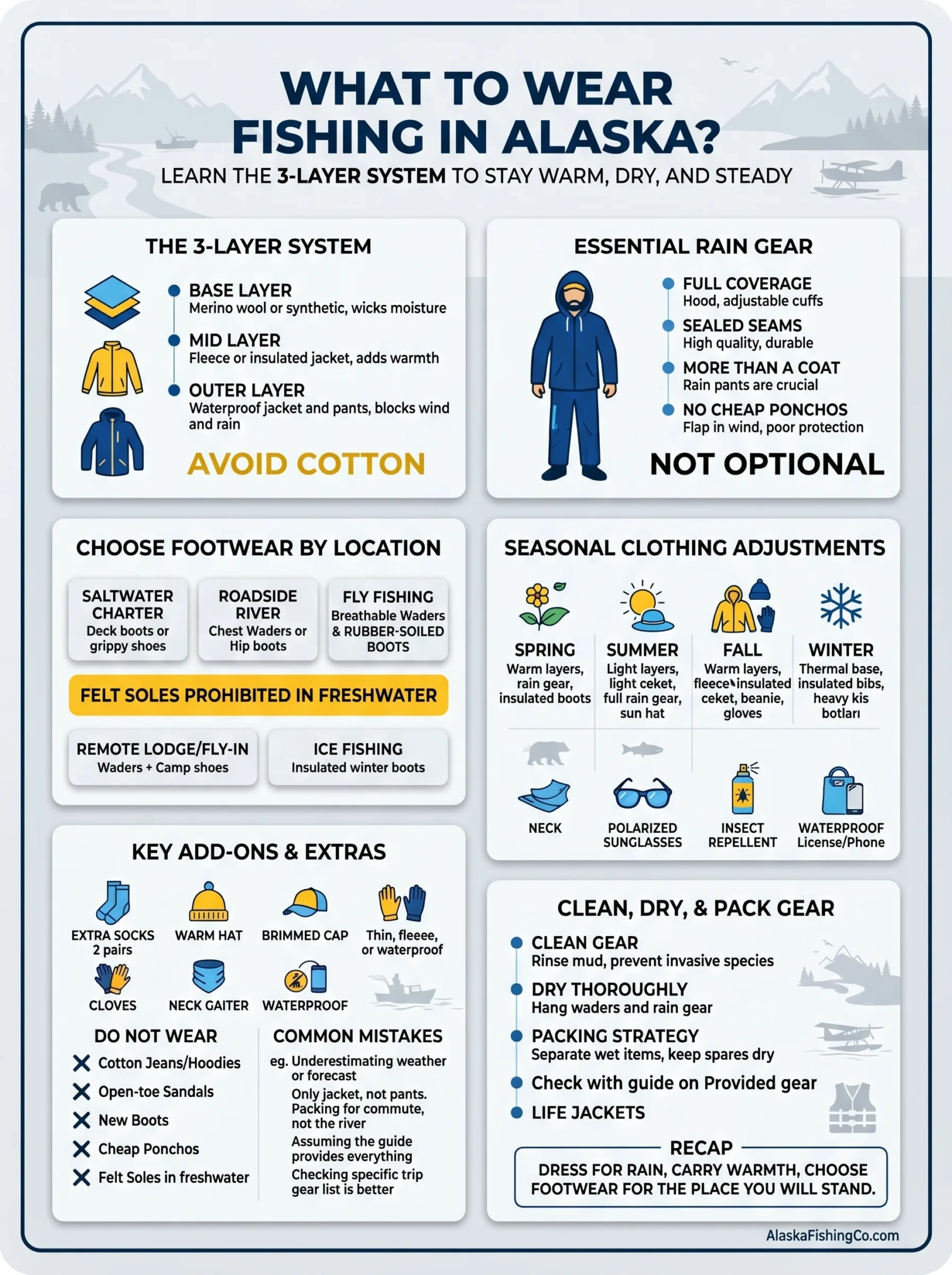
Alaska fishing clothes should keep you warm, dry, visible, and steady on wet ground. Most visitors do best with a layered outfit: a moisture-wicking base layer, a warm middle layer, waterproof rain gear, and footwear matched to the water they will stand in.
Alaska can feel mild in the parking lot and cold on the riverbank 20 minutes later. Wind off the water, rain, cold spray, muddy banks, and long periods of standing still matter more than the temperature shown on a phone app. The safest clothing plan is simple: dress for wet weather first, then adjust warmth with layers.
If you remember one thing… bring real rain gear and layers, not just a warm jacket. A sunny morning in Anchorage, Kenai, Seward, Juneau, or Fairbanks can still turn into a damp fishing day.
What To Know First
The right fishing outfit in Alaska depends on season, region, and fishing style. A charter boat, a salmon river, a remote fly-in creek, and an ice fishing lake all need different clothing choices.
- Wear layers: Start light, add warmth, and keep a waterproof shell ready.
- Expect rain: Rain jacket and rain pants are often more useful than a heavy coat.
- Choose footwear carefully: Wet decks, slick rocks, mud, and cold water can all change the best option.
- Do not use felt soles in freshwater: Alaska prohibits absorbent felt or similar fibrous soles while sport or personal use fishing in fresh water.
- Carry dry backup items: Extra socks, gloves, and a dry hat can save a long day.
- Ask your guide: Some lodges and charter operators provide rain gear, boots, or flotation gear, while others expect you to bring your own.
Start With Layers, Not One Heavy Coat
The best general outfit for fishing in Alaska is a three-layer system: a dry base layer, a warm middle layer, and a waterproof outer layer. ADF&G visitor guidance for Southcentral Alaska notes that summer days may be mild, but anglers should still bring rain gear, wear layers, and carry a light waterproof jacket.[a]
A single thick coat can feel warm at first, but it is hard to adjust when the weather changes or when you walk down a trail to the river. Layers let you remove warmth while hiking, then put it back on while standing in cold wind or sitting on a boat.
A Good Alaska Fishing Layer System
- Base layer: Merino wool or synthetic long-sleeve top and bottoms. This layer should move sweat away from your skin.
- Mid layer: Fleece, wool sweater, or light insulated jacket. This is your warmth layer.
- Outer layer: Waterproof rain jacket and rain pants. This layer should block rain, spray, and wind.
- Extra layer: A light puffy jacket or spare fleece for cold mornings, fall trips, and boat rides.
Avoid cotton as the main layer next to your skin. Cotton holds water and can stay cold for hours. A cotton hoodie may feel fine around town, but it is a poor choice once rain, fish slime, boat spray, or wader leaks get involved.
Dress for Rain Even on a Clear Morning
Rain gear is not optional for most Alaska fishing trips. Even when the forecast looks friendly, a waterproof jacket and rain pants help with light rain, boat spray, wet seats, dripping brush, and wind.
Good rain gear should cover your wrists, waist, and seat when you bend or sit. A jacket with a hood, adjustable cuffs, and enough room for a fleece layer underneath is more practical than a tight city raincoat. Rain pants matter because wet legs can pull heat away quickly, especially on a boat or while wading.
Rain Gear That Works Better for Fishing
- A waterproof jacket with a hood and sealed or well-covered zippers
- Waterproof rain pants that fit over base layers or light hiking pants
- A brimmed cap under the hood to keep rain off your face
- Waterproof gloves or neoprene-style gloves for cold rain
- A small dry bag for phone, license, wallet, and spare socks
Worth Noting
Cheap ponchos are not a great match for Alaska fishing. They flap in wind, catch on gear, and leave your legs exposed. ADF&G’s McNeil River checklist specifically recommends good raincoat and rain pants, and notes that ponchos are not recommended for cold, rainy, windy conditions.[g]
Choose Footwear by Where You Will Stand
Your footwear should match the surface under your feet. A charter deck, gravel riverbar, muddy salmon bank, rocky stream, and remote tundra creek all call for different levels of grip, waterproofing, and ankle support.
For saltwater charters, many visitors can use waterproof deck boots or sturdy shoes with non-marking grip if the operator allows them. For river fishing, especially salmon, trout, grayling, and Dolly Varden trips, waders or waterproof boots may be needed. For remote fishing, footwear should also handle mud, brush, and uneven trails.
| Trip Style | Best Footwear | Why It Works | Watch Out For |
|---|---|---|---|
| Saltwater charter | Waterproof deck boots or grippy closed-toe shoes | Handles wet decks and fish cleaning areas | Some boats may not allow dirty soles or bulky boots |
| Roadside salmon river | Chest waders or hip boots with approved wading boots | Keeps legs dry while standing near current | Wading depth and current can be unsafe; do not push it |
| Fly fishing for trout or grayling | Breathable waders and rubber-soled wading boots | Better for walking and casting in shallow water | Felt soles are not allowed in Alaska freshwater |
| Remote lodge or fly-in creek | Waders plus camp shoes or hiking boots | Works for wet terrain and long shore days | Bring backup socks and check drying options |
| Ice fishing | Insulated waterproof winter boots | Protects feet from ice, snow, and long periods of standing | Regular rain boots may be too cold |
The Felt-Sole Rule Visitors Miss
Alaska prohibits footgear with absorbent felt or similar fibrous material on the soles while sport or personal use fishing in fresh water.[c] Many visitors own felt-soled wading boots from another state or country, so this rule is easy to overlook.
Use rubber-soled wading boots instead. Studded rubber may help on slippery rocks where allowed by your guide or trip operator, but check before packing studs for boats, lodges, or aircraft because some operators restrict them.
Match Your Outfit to the Type of Fishing
There is no single perfect Alaska fishing outfit. The best clothes change with how you fish, how much you move, and whether you are on saltwater, a riverbank, a lake, or a remote stream.
Think about the whole day, not only the moment you cast. You may stand in rain, sit in a skiff, walk through wet grass, wait in wind, handle fish, or ride back to port in cold spray.
Saltwater Charter Outfit
- Base layer or quick-dry shirt
- Fleece or light insulated jacket
- Waterproof jacket and rain pants
- Deck boots or grippy waterproof shoes
- Warm hat, sun hat, and thin gloves
- Polarized sunglasses for glare
Riverbank Salmon Outfit
- Synthetic or wool base layer
- Waders or waterproof boots, depending on water depth
- Rain shell and rain pants if not wearing waders
- Rubber-soled wading boots
- Fingerless or light waterproof gloves
- Bear spray carried where it is secure and reachable, where legal and appropriate
Remote Fly-In Outfit
- Layered clothing for standing still in wind and rain
- Waders or hip boots requested by the lodge or guide
- Extra socks packed in a waterproof bag
- Warm hat and gloves even in summer
- Bug protection and sun protection
- Dry clothes for camp or the flight back
One Detail People Miss
Fish smell can stay on waders, vests, gloves, and sleeves. ADF&G bear country guidance reminds anglers that clothing and gear may smell fishy, which matters when fishing salmon streams shared with bears.[f]
Season-by-Season Clothing for Alaska Fishing
Summer is the easiest season to pack for, but it still calls for rain gear and layers. Spring, fall, winter, and remote northern trips need a colder setup with better insulation and backup clothing.
Alaska is too large for one weather rule. Southeast Alaska can be wet and mild. Interior areas can feel warmer in summer and colder at night. Western and Arctic areas can bring cold wind, wet terrain, and abrupt weather shifts. The National Park Service notes that summer visitors in parts of northern Alaska can still see near-freezing temperatures, wind, rain, and even snow, and recommends warm clothing, layers, rain gear, sturdy boots, and waders for wet terrain.[b]
Spring Fishing Clothing
- Warm base layers
- Fleece or insulated mid layer
- Waterproof shell and rain pants
- Insulated waterproof boots or waders with warm socks
- Warm hat and gloves
Summer Fishing Clothing
- Light base layer or quick-dry shirt
- Fleece or light puffy jacket for mornings and boat rides
- Full rain gear
- Waders, deck boots, or waterproof hiking footwear based on trip type
- Sun hat, sunglasses, sunscreen, and insect repellent
Fall Fishing Clothing
- Warmer base layers
- Fleece plus insulated jacket
- Rain shell that fits over insulation
- Warm gloves and a beanie
- Extra socks and a dry backup layer
Winter and Ice Fishing Clothing
- Thermal base layers
- Insulated bibs or winter pants
- Heavy waterproof winter boots
- Warm gloves or mittens with a backup pair
- Hat, neck gaiter, and wind-blocking outerwear
Cold Water and Boat Clothing
When fishing from a boat in Alaska, dress for the water and wind, not only the air. A life jacket, waterproof outerwear, and warm layers are part of the clothing plan, especially on saltwater, large rivers, and cold lakes.
Air temperature can mislead visitors. A calm dock may feel comfortable, but wind and spray on the ride out can chill you fast. ADF&G safe boating guidance says Alaska boaters must have a Coast Guard-approved life jacket for each person aboard, notes that children 13 and younger must wear one in open boat or open deck situations, and advises boaters to dress for cold water because Alaska water can remain cold even during summer.[e]
Boat Clothing Checklist
- Wear or keep ready a properly fitted life jacket as required for the vessel and trip
- Use rain pants, not just a jacket, because seats and decks get wet
- Bring a warm hat even for a summer halibut or salmon charter
- Pack thin gloves for bait, rail time, and wind exposure
- Keep one dry layer in a bag that closes securely
- Ask the captain what footwear is best for that boat
Before You Move On
A life jacket buried under a seat is not clothing. On cold water, the better habit is to wear it when the boat is moving, when weather is rough, or whenever the operator tells the group to put one on.
Small Items That Make a Long Day Easier
Small clothing items often make the difference between a fun day and a miserable one. Gloves, socks, hats, sunglasses, and dry storage are easy to pack and hard to replace once you are on the water.
Alaska fishing often means wet hands, wind, glare, mosquitoes, and long daylight. Pack for comfort without overloading yourself.
Useful Add-Ons
- Two pairs of socks: One pair on your feet and one dry pair in your bag.
- Warm hat: A beanie works for boat rides, cool mornings, and fall fishing.
- Brimmed cap: Helps with rain, sun, and seeing into the water.
- Gloves: Thin sun gloves, fleece gloves, or waterproof gloves depending on season.
- Neck gaiter: Useful for wind, bugs, and sun.
- Polarized sunglasses: Help reduce glare on rivers, lakes, and saltwater.
- Insect repellent: Often useful in summer, especially near still water or brush.
- Waterproof pouch: Keep your license, phone, cards, and paper items dry.
What Not to Wear Fishing in Alaska
Do not dress for Alaska fishing the way you would dress for a short walk in a city park. Clothes that look warm indoors can fail when they get wet, rub under waders, or stay cold in wind.
The goal is not to buy the most expensive gear. The goal is to avoid clothing that traps water, slips on wet surfaces, or stops you from moving safely.
Clothing to Avoid
- Jeans as your main fishing pants: Denim gets heavy, cold, and slow to dry.
- Cotton hoodies as your main warm layer: They hold moisture and can chill you.
- Open-toe sandals on boats or riverbanks: Hooks, fish boxes, rocks, and wet decks are not friendly to exposed feet.
- New boots on a long trip: Break them in before travel.
- Cheap plastic ponchos: They tear easily and do not protect your lower body well.
- Felt-soled wading boots in freshwater: They are prohibited for Alaska sport and personal use fishing in fresh water.
Clean, Dry, and Pack Gear the Right Way
What you wear after fishing matters too. Waders, boots, rain pants, gloves, and packs can carry mud, water, plant material, and fish smell from one place to another.
ADF&G asks anglers and boaters to clean, drain, dry, and when needed decontaminate gear to reduce the spread of aquatic invasive species. That includes wading footgear, waders, boats, trailers, coolers, buckets, and anything that touches the water.[d]
After-Fishing Clothing Routine
- Rinse mud and plant material off boots and waders before leaving the area.
- Separate removable wading boot parts or liners so they can dry.
- Hang rain gear and waders where air can move around them.
- Keep fishy gloves and clothing away from food and sleeping areas.
- Pack wet items in a separate bag for travel, then dry them fully as soon as possible.
Common Mistakes When Dressing for Alaska Fishing
Most clothing problems come from underestimating water, wind, and time. A visitor may be warm at breakfast, then cold after three hours of rain, boat spray, or standing still.
Mistake 1: “It Is Summer, So I Do Not Need Warm Clothes”
Correct explanation: Summer still calls for a fleece or light insulated layer, rain gear, and a warm hat.
Why it gets mixed up: Visitors often compare Alaska summer to summer at home. The real fishing conditions may include cold water, wind, and long hours outdoors.
Mistake 2: “A Waterproof Jacket Is Enough”
Correct explanation: Rain pants are often just as useful as a jacket.
Why it gets mixed up: People think rain falls only from above. On boats and riverbanks, water also comes from wet seats, spray, brush, and kneeling near fish.
Mistake 3: “My Old Felt Boots Are Fine”
Correct explanation: Felt-soled footwear is prohibited for freshwater sport and personal use fishing in Alaska.
Why it gets mixed up: Felt soles are still known among fly anglers in many places, so travelers may pack them without checking Alaska rules.
Mistake 4: “I Can Dry Everything Overnight”
Correct explanation: In wet areas, waders, socks, and gloves may still be damp the next morning.
Why it gets mixed up: Hotel rooms, cabins, boats, and remote lodges may have limited drying space.
Mistake 5: “The Guide Will Provide Everything”
Correct explanation: Some operators provide boots, rain gear, or flotation gear, but not all do.
Why it gets mixed up: Charter, lodge, and walk-and-wade trips all operate differently. Ask before packing.
Real-Life Alaska Fishing Scenarios
These clothing examples fit common visitor situations. Use them as a starting point, then adjust for your exact location, operator instructions, and forecast.
- July halibut charter out of Homer: Wear base layer, fleece, rain jacket, rain pants, warm hat, gloves, and deck boots because the ride can feel colder than town.
- Kenai River salmon bank fishing: Wear waders or waterproof boots, rubber-soled traction, rain shell, and a dry bag for extra socks and license items.
- Juneau coho fishing in steady rain: Wear full rain gear, fleece, waterproof gloves, and a cap under your hood to keep water off your face.
- Interior grayling day near Fairbanks: Wear quick-dry pants, light base layer, sun hat, insect repellent, and keep a rain jacket in your pack.
- Remote fly-in trout creek: Wear layers, waders, approved wading boots, warm socks, and carry dry backup clothing because weather delays can happen.
- Fall steelhead or trout trip: Wear warmer base layers, fleece, waterproof shell, beanie, gloves, and avoid cotton under waders.
- Ice fishing on an Alaska lake: Wear insulated waterproof boots, thermal layers, wind-blocking outerwear, warm gloves, and a dry spare hat.
How to Pack Clothing for a Guided Trip or Charter
Pack less like a tourist and more like someone who may be wet for hours. The right bag setup keeps spare layers dry and keeps fishy or muddy items away from clean clothes.
Before the trip, ask the operator what they provide. Some charters have flotation coats or rain gear. Some lodges provide waders. Some walk-and-wade guides expect you to arrive fully dressed for the river.
Questions to Ask Before You Go
- Do you provide rain gear, boots, waders, or life jackets?
- Should footwear be non-marking, stud-free, or rubber-soled?
- Will we be standing in water, walking through brush, or staying on a boat?
- Is there a place to dry waders and boots overnight?
- Should I bring bear spray, or is that handled by the guide?
- Do I need a waterproof printed license, or is a digital copy acceptable for this trip?
Simple Packing Method
- Wear your base and mid layers to the meeting point.
- Keep rain gear at the top of your bag.
- Pack spare socks, gloves, and hat in a small dry bag.
- Use a separate bag for wet clothing after the trip.
- Keep license, passport or ID if needed, phone, and medication in waterproof storage.
A Simple Outfit Formula That Works for Most Visitors
For a first Alaska fishing trip, the safest default is simple: quick-dry base clothing, fleece, waterproof rain gear, warm hat, gloves, and waterproof footwear suited to the trip.
This setup works for many summer and shoulder-season fishing days. It is not enough for deep winter, extreme remote travel, or specialized cold-water trips, but it covers the common visitor problem: getting wet and cold when the day looked mild.
For a Typical Summer Day
- Quick-dry shirt or light wool base layer
- Fleece or light puffy jacket
- Waterproof jacket and rain pants
- Waders, deck boots, or waterproof hiking shoes
- Warm hat, brimmed cap, sunglasses, and light gloves
For a Cold or Wet Day
- Warm base layer top and bottom
- Fleece plus insulated jacket
- Full rain shell over insulation
- Waterproof gloves or glove liners with a shell
- Extra socks and spare hat in a dry bag
A good Alaska fishing outfit is not about looking technical. It is about staying dry enough, warm enough, and steady enough to fish safely for the whole day.
The most common mistake is packing for the town weather instead of the water. A useful rule is simple: dress for rain, carry warmth, and choose footwear for the exact place your feet will be.
Alaska Fishing Clothing Questions Answered
What should I wear fishing in Alaska in summer?
Wear a quick-dry or wool base layer, fleece or light insulated jacket, waterproof rain jacket, rain pants, and footwear matched to your trip. Add a warm hat, brimmed cap, gloves, polarized sunglasses, sunscreen, insect repellent, and dry socks in a waterproof bag.
Do I need waders to fish in Alaska?
You do not always need waders. Saltwater charters and some dock or shore trips may not require them. River fishing, fly fishing, and muddy salmon banks often do. Ask your guide or lodge before buying or packing waders.
Can I wear felt-soled wading boots in Alaska?
No. Felt or similar absorbent fibrous soles are prohibited while sport or personal use fishing in Alaska fresh water. Choose rubber-soled wading boots instead, and ask your operator whether studs are allowed.
Are jeans okay for Alaska fishing?
Jeans are not a good main fishing layer. Denim gets heavy when wet, dries slowly, and can feel cold under wind or waders. Quick-dry pants, wool base layers, or synthetic fishing pants are better choices.
What shoes should I wear on an Alaska fishing charter?
Most visitors do best with waterproof deck boots or closed-toe shoes with good grip. Avoid open-toe sandals. Check with the charter operator because some boats have footwear rules for deck safety and cleanliness.
Should I bring rain pants for Alaska fishing?
Yes. Rain pants are strongly recommended because boat seats, wet brush, river spray, and steady rain can soak your legs even if your jacket is good. They also help block wind.
What should I wear under fishing waders in Alaska?
Wear wool or synthetic base layers and warm socks under waders. Avoid cotton jeans or bulky cotton sweatpants. In colder weather, add fleece pants or insulated layers that do not restrict movement.
Alaska Fishing References
- [a] Alaska Department of Fish and Game, Alaska Sport Fishing Guide — Used for Alaska sport fishing visitor context, regional weather notes, and ADF&G advice to bring rain gear, layers, and a waterproof jacket. (Official state fish and wildlife agency.)
- [b] National Park Service, Noatak National Preserve Weather — Used for Alaska weather variability, cold summer conditions, wind, rain, layers, sturdy boots, and waders for wet terrain. (Official U.S. National Park Service page.)
- [c] Alaska Department of Fish and Game, 2026 Southcentral Sport Fishing Regional Regulations — Used for the current wording on felt-soled boots being prohibited in fresh water. (Official state regulation summary.)
- [d] Alaska Department of Fish and Game, Preventing Invasive Species — Used for clean, drain, dry, and decontamination steps for fishing gear, boats, and wading equipment. (Official state invasive species prevention guidance.)
- [e] Alaska Department of Fish and Game, Safe Boating in Alaska — Used for life jacket requirements, cold-water boating advice, and dressing for water temperature. (Official ADF&G safety article with Coast Guard input.)
- [f] Alaska Department of Fish and Game, Fishing in Bear Country — Used for bear-country fishing context and the reminder that waders, vests, and clothes can smell fishy. (Official ADF&G wildlife safety article.)
- [g] Alaska Department of Fish and Game, McNeil River State Game Sanctuary Checklist — Used for practical cold rain clothing, extra socks, wool or synthetic layers, waterproof gloves, raincoat, rain pants, and wader notes. (Official ADF&G checklist for a wet Alaska field setting.)