
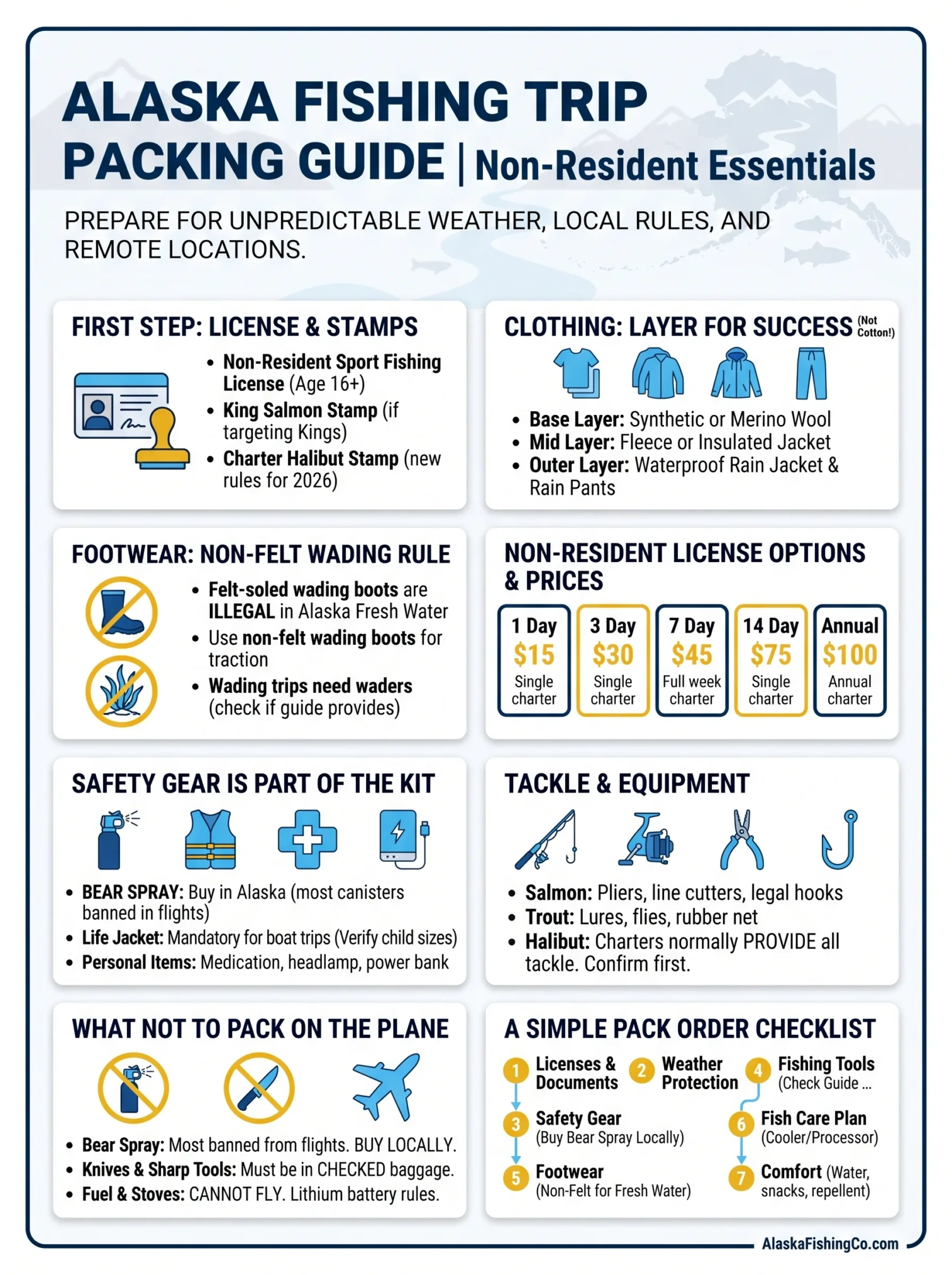
Pack for an Alaska fishing trip like you are preparing for wet weather, cold water, changing rules, and a long day away from easy stores. Most visitors need more than a rod and a rain jacket: bring your license details, layered clothing, non-felt wading gear, fish storage, safety items, and a plan for the exact region you will fish.
If you remember one thing, make it this: Alaska packing is less about the month on the calendar and more about the water, the species, and the distance from help. A sunny morning can turn wet by lunch, a charter may need different items than a river day, and a salmon trip has paperwork details that a casual lake outing may not.
What To Know First
The right Alaska fishing packing list starts with the trip type. A guided halibut charter, a Kenai River salmon day, a fly-out lodge trip, and a roadside trout stop all call for different gear.
- Pack your license before your lures. Most visitors need an Alaska sport fishing license, and some species require extra stamps or records.
- Bring layers, not one heavy coat. Rain, wind, and cold spray are common even in summer.
- Use non-felt wading footwear in fresh water. Felt-soled wading boots are not legal for Alaska fresh water fishing.
- Plan for fish care. Coolers, fish boxes, dry bags, and airline-safe packing matter if you want to bring fillets home.
- Check the exact area before you go. Alaska rules can vary by region, water body, species, and emergency order.
Start With Your License, Stamp, and Trip Paperwork
Before packing tackle, pack proof that you are allowed to fish. Alaska requires residents age 18 or older and nonresidents age 16 or older to buy and carry a sport fishing license; a king salmon stamp is also required when fishing for king salmon, except in stocked lakes.[a]
For tourists and foreign visitors, this usually means buying a nonresident sport fishing license for the number of days you plan to fish. You can buy it online, through many sporting goods stores, or at Fish and Game offices. A printed copy is useful, but a saved digital copy is also worth keeping where it can be opened without cell service.
- For salmon trips: ask whether you need only the sport fishing license or also a king salmon stamp.
- For kids: nonresidents under 16 do not need a sport fishing license, but harvest record rules can still apply for fish with annual limits.
- For foreign visitors: pack your passport or photo ID, your license confirmation, and any charter paperwork.
- For guided trips: bring the booking email, meeting point, captain or guide contact number, and cancellation/weather policy.
Nonresident License Lengths and Current Listed Prices
ADF&G lists nonresident sport fishing licenses in 1-day, 3-day, 7-day, 14-day, and annual lengths. The same page lists foreign/alien nonresident sport fishing licenses with the same short-trip fishing price structure. Always check the license page again before purchase, because fees can change.[b]
| License Type | Best For | Current Listed Price |
|---|---|---|
| 1 Day Nonresident Sport Fishing License | One charter or one short fishing day | $15 |
| 3 Day Nonresident Sport Fishing License | Weekend trips or short cruise stop add-ons | $30 |
| 7 Day Nonresident Sport Fishing License | One full vacation week | $45 |
| 14 Day Nonresident Sport Fishing License | Longer road trips or lodge stays | $75 |
| Annual Nonresident Sport Fishing License | Repeat trips in the same year | $100 |
King salmon stamps are sold separately in matching short-trip lengths. If your plan includes king salmon, do not wait until you are standing at the river to figure this out.
Worth Noting
A license lets you fish, but it does not override local limits, closures, gear rules, or species rules. Treat the license as the first item in the pack, not the whole legal checklist.
Pack Clothing for Rain, Wind, and Cold Water
For most Alaska fishing trips, clothing matters more than fashion or luggage weight. Pack layers that stay warm when damp, a waterproof outer shell, and dry backup clothes for the ride back.
Summer visitors often underestimate how cold a boat ride or river morning can feel. Coastal areas can be wet and windy. Interior rivers can start cold, warm up in the afternoon, then cool again fast. Cotton is a poor choice because it holds moisture and dries slowly.
- Base layer: synthetic or merino top and bottom, especially for boat days and early mornings.
- Mid layer: fleece, wool, or light insulated jacket.
- Outer layer: waterproof rain jacket and rain pants, not just a light windbreaker.
- Hands: one warm pair and one thinner pair that still lets you handle line.
- Head: warm beanie, brimmed cap, and sunglasses.
- Feet: wool or synthetic socks, plus one dry spare pair in a sealed bag.
Do You Need Rain Pants?
Yes, rain pants are worth packing for most Alaska fishing trips. They keep you dry when sitting on a wet boat seat, walking through wet grass, kneeling near a fish, or standing in wind-driven rain.
Bring the Right Footwear and Wading Gear
If your trip includes rivers, creeks, or shore fishing, bring stable footwear that matches the surface. For fresh water, do not pack felt-soled wading boots; Alaska prohibits felt-soled waders and wading boots in fresh water to reduce the spread of invasive species.[f]
Many visitors do fine with waterproof hiking boots for bank fishing, but wading trips need more support. Alaska rivers can be slick, cold, and uneven. If you are booking a guide, ask whether waders and boots are included before packing bulky gear.
- For guided river trips: ask about provided waders, boot sizes, and whether studs are allowed.
- For self-guided wading: bring non-felt boots, a wading belt, and a staff if you are not used to moving water.
- For shore fishing: waterproof boots are often better than sneakers.
- For lodge trips: pack camp shoes so wet boots can dry overnight.
One Detail People Miss
Wading boots that were perfect in another state may be wrong for Alaska if they have felt soles. Check the sole material before you fly, not after you arrive.
Pack Fishing Gear Based on Species and Water Type
The best fishing gear to pack depends on what you are targeting. Salmon, halibut, trout, grayling, pike, and rockfish do not call for the same rods, line, leaders, hooks, or storage.
If you are fishing with a charter or lodge, do not overpack tackle. Most guides provide the right rods, reels, bait, terminal tackle, and landing tools. If you are fishing on your own, choose a smaller set of reliable items rather than a heavy box of gear you may never use.
- For salmon: pack pliers, line cutters, spare leaders, legal hooks for the area, and a way to record harvest if needed.
- For trout or grayling: pack small lures, flies, light leaders, forceps, and a soft rubber net if releasing fish.
- For halibut charters: confirm what the captain provides before bringing rods or heavy tackle.
- For saltwater trips: bring corrosion-resistant pliers and a dry bag for your phone and license.
Species Rules Can Change the Packing List
Alaska sport fishing rules are organized by statewide topics and regions, including Northern, Southwest, Southcentral, and Southeast areas. That means the right hook, bait, retention plan, and harvest record can change with the location you choose.[c]
Do Not Forget Safety Gear
Safety gear is part of the fishing kit in Alaska. Cold water, remote roads, slippery banks, bears, and changing weather can turn small packing gaps into real problems.
On a charter, the vessel should carry required boat safety equipment. You should still bring personal items that fit you and stay with you: medication, dry layers, phone power, eye protection, and a plan for getting back if the trip runs late.
- Life jacket: ask before the trip if you need a special size or if children are coming.
- Dry bag: keep phone, license, wallet, medication, and dry socks sealed.
- Headlamp: useful for early starts, late returns, and cleaning gear.
- First-aid kit: include bandages, blister care, seasickness medication, and any personal medicine.
- Navigation backup: downloaded map, written meeting point, and guide phone number.
- Power bank: cold weather and poor signal drain phones faster.
Bear Country Items
Many Alaska fishing areas are bear country. ADF&G tells anglers not to make it easy for bears to find food, backpacks, garbage, fish, or fish waste while fishing, camping, or moving to and from the water.[e]
- Carry bear spray where it is reachable, not buried in a backpack.
- Keep food, scented items, and fish away from sleeping areas.
- Do not leave fish on the bank while you keep fishing.
- Use a guide’s bear-safety instructions over guesswork.
- Make noise when visibility is poor near brushy streams.
Before You Move On
Bear spray is a local purchase item for most air travelers. Many bear spray canisters are too large for airline baggage rules, so plan to buy, rent, or receive it in Alaska rather than packing it from home.
Know What Not To Pack on the Plane
Some fishing and outdoor items are fine in Alaska but not fine in carry-on luggage. Sharp tools, fillet knives, large liquids, fuel, and many sprays need careful handling before you fly.
The FAA’s PackSafe guidance says most bear sprays are beyond the 4-ounce size and therefore cannot be carried on aircraft; insect repellents applied to skin or clothing have separate quantity limits and nozzle protection requirements.[g]
- Do not pack bear spray from home unless you have verified current airline, TSA, and FAA rules and the canister qualifies.
- Put knives and sharp tools in checked baggage where allowed, packed safely.
- Leave fuel and camp stove canisters out of luggage. Buy approved supplies after arrival if needed.
- Check lithium battery rules for power banks and camera batteries before flying.
- Ask your charter about fish boxes before buying coolers or freezer bags.
Pack for the Region, Not Just Alaska as a Whole
Alaska is too large for one generic packing list. Southeast Alaska, Southcentral rivers, Interior lakes, Bristol Bay lodges, and Arctic trips can feel like different destinations.
Even the rules can shift close to your travel date. ADF&G emergency orders can open or close seasons or areas, change bag limits, or modify methods of harvest, and they carry the force of law.[d]
- Southeast Alaska: pack for rain, saltwater spray, boat decks, and fish processing logistics.
- Southcentral Alaska: prepare for salmon rivers, coastal charters, cool mornings, and crowded access points in peak season.
- Interior Alaska: bring strong insect repellent, sun protection, and layers for wider temperature swings.
- Fly-out trips: use soft-sided bags, strict weight control, and waterproof packing cubes.
- Remote lodge trips: ask for a lodge packing list before adding heavy tackle or duplicate clothing.
Halibut Charter Note for 2026
If you are keeping halibut on a charter in IPHC Areas 2C or 3A, check the current charter requirements before the trip. ADF&G notes that, new for 2026, charter anglers age 18 or older must have a Charter Halibut Stamp to keep halibut in those areas, with the stamp handled through the charter system.[h]
Food, Fish Storage, and Day Pack Items
A good day pack keeps you warm, fed, dry, and organized. It should not be so large that it gets in the way on a boat or riverbank, but it should hold what you need if the day runs longer than planned.
For fish storage, let the trip style lead. A charter may process, bag, freeze, and box fish for airline travel. A self-guided trip may require your own cooler, ice plan, fish bags, and legal transport awareness.
- Water bottle: bring more than you think you need, especially on sunny river days.
- Snacks: choose easy food that does not create messy trash or strong odors.
- Small towel: useful for hands, gear, camera lenses, and wet boat seats.
- Trash bag: pack out wrappers, line pieces, and used wipes.
- Fish bags: helpful for self-guided days when fish will go into a cooler.
- Cooler plan: know whether your lodging has freezer space before keeping a lot of fish.
Worth Noting
Fish care starts before the first cast. If you plan to bring fish home, ask about cleaning, freezing, vacuum packing, airline boxes, and pickup times before the trip day.
Common Mistakes When Packing for Alaska Fishing
Most packing mistakes come from treating Alaska like a normal summer fishing trip. The trip may be easy and comfortable, but the margin for being wet, cold, underprepared, or misinformed is smaller.
Mistake: Packing Only a Warm Jacket
Correct explanation: Pack a waterproof outer layer plus warm layers underneath. A warm jacket that wets through becomes dead weight.
Why people mix this up: Summer travel photos often show blue skies, but fishing puts you near water, spray, fog, and wind.
Mistake: Buying the License but Forgetting the Stamp
Correct explanation: A king salmon trip can require a sport fishing license and a king salmon stamp. Halibut charters may have their own 2026 stamp process in certain areas.
Why people mix this up: Many states use one simple license for most fishing, while Alaska has species and trip-type details.
Mistake: Bringing Felt Wading Boots
Correct explanation: Use non-felt soles for Alaska fresh water. If you are unsure, ask your guide or rent the right boots locally.
Why people mix this up: Felt has been popular with anglers elsewhere because it grips wet rocks, but Alaska’s freshwater rule is different.
Mistake: Packing Too Much Tackle for a Guided Trip
Correct explanation: Most guides provide working gear. Your job is usually clothing, paperwork, personal items, and fish transport planning.
Why people mix this up: Anglers like familiar gear, but airline weight and remote transfers make extra gear a burden.
Mistake: Treating Bear Spray Like Normal Camping Gear
Correct explanation: Bear spray is often better handled after arrival, then carried where it is reachable in the field.
Why people mix this up: It feels like an item to pack from home, but airline rules make that difficult for most travelers.
Real-Life Alaska Packing Scenarios
Use the trip examples below to adjust your bag. The same person may need a very different setup on different days of the same Alaska vacation.
- One-day halibut charter from Homer: Bring rain gear, warm layers, seasickness medicine, snacks, license, photo ID, and a fish-box plan; heavy rods are usually provided.
- Kenai River salmon day with a guide: Bring non-cotton layers, waterproof outerwear, license, any required stamp, sunglasses, and a dry bag for phone and documents.
- Self-guided roadside trout stop: Bring a valid license, small tackle kit, non-felt footwear if wading, forceps, a tape measure, and the local regulation summary.
- Fly-out lodge week in Bristol Bay: Pack soft-sided luggage, layered clothing, spare socks, personal medication, and only the tackle the lodge says you need.
- Cruise passenger booking a short fishing excursion: Pack license confirmation, waterproof jacket, warm mid layer, closed-toe shoes, and a plan for what happens if fish are shipped home.
- Family lake fishing near town: Check age rules, bring kids’ rain gear, snacks, wipes, sun protection, and a simple tackle box with legal hooks and lures.
- Remote river float or camp trip: Add bear-resistant food storage, repair kit, satellite communication, dry bags, extra base layers, and a clear fish-waste plan.
A Simple Pack Order Before You Leave
The easiest way to avoid forgetting something is to pack in order: paperwork, clothing, safety, fishing gear, fish storage, then comfort items. This keeps the trip legal and practical before you add extras.
- License and documents: sport fishing license, stamp if needed, harvest record card if needed, ID, charter confirmation.
- Weather protection: rain jacket, rain pants, warm layers, gloves, hat, dry socks.
- Water safety: dry bag, personal medicine, phone power, headlamp, first-aid basics.
- Fishing tools: pliers, line cutter, legal tackle, sunglasses, small towel.
- Footwear: waterproof boots, non-felt wading boots if needed, camp shoes for overnight trips.
- Fish care: cooler plan, fish bags, freezer access, airline box or processor details.
- Comfort: snacks, water, insect repellent, sunscreen, camera, spare clothes.
A Short Final Check
Alaska fishing rewards visitors who pack for wet weather, cold water, local rules, and fish care from the start. A small, organized kit beats a heavy bag filled with gear that does not match the trip.
The most common mistake is packing for the photo you hope to take instead of the conditions you may actually face. The rule to remember is simple: license first, layers second, safety always.
Alaska Fishing Packing Questions Answered
Do tourists need a fishing license in Alaska?
Yes, most tourists do. Nonresidents age 16 or older generally need an Alaska sport fishing license to fish in fresh or marine waters. Younger nonresidents do not need the license, but harvest record rules can still apply for some fish with annual limits.
Can foreign visitors buy an Alaska fishing license online?
Yes. Foreign visitors can buy a nonresident Alaska sport fishing license online through ADF&G, or through many license vendors after arrival. It is smart to save a digital copy and bring a printed backup if the trip goes somewhere with poor cell service.
What clothes should be packed for Alaska fishing in summer?
Pack a moisture-wicking base layer, fleece or wool mid layer, waterproof rain jacket, rain pants, warm socks, gloves, a beanie, and a brimmed hat. Even in summer, wind, rain, cold water, and boat spray can make the day feel much colder than expected.
Should I bring my own fishing rod to Alaska?
Bring your own rod only if you are fishing independently or strongly prefer familiar gear. Most charters and guided trips provide rods, reels, bait, and tackle that match the fishery. Ask before flying with long or heavy gear.
Are felt-soled wading boots allowed in Alaska?
No, felt-soled waders and wading boots are not legal for Alaska fresh water fishing. Pack non-felt soles or arrange rental boots with your guide or lodge.
Can I fly to Alaska with bear spray?
Most visitors should plan to get bear spray after arriving in Alaska. Airline and hazardous-material rules make many bear spray canisters unsuitable for baggage. If you need it, buy or rent it locally and learn how to carry and use it safely.
What should I pack for a halibut charter in Alaska?
Pack rain gear, warm layers, non-slip footwear, sunglasses, seasickness medicine, snacks, water, your fishing license, photo ID, and a fish-shipping plan. The charter normally provides heavy rods, bait, tackle, and boat safety gear, but you should confirm before the trip.
How much tackle should I bring for an Alaska fishing trip?
For guided trips, bring very little tackle unless your guide asks for something specific. For self-guided trips, pack a focused set based on the target species and local regulations rather than a large box of mixed lures.
Alaska Fishing References
- [a] Alaska Department of Fish and Game — Sport Fishing Licenses, King Salmon Stamps, IDs and Harvest Record Cards — Supports the license age rules, king salmon stamp note, purchase options, and harvest record card details. This is the official Alaska state fish and game agency.
- [b] Alaska Department of Fish and Game — Prices: Sport Fishing Licenses and King Salmon Stamps — Supports the nonresident license lengths and current listed prices. This is the official fee page from the state agency that sells Alaska sport fishing licenses.
- [c] Alaska Department of Fish and Game — Sport Fishing Regulations — Supports the regional regulation note for Northern, Southwest, Southcentral, and Southeast Alaska. This is the official sport fishing regulation hub.
- [d] Alaska Department of Fish and Game — Emergency Orders and Press Releases: Sport Fishing — Supports the warning that openings, closures, bag limits, and methods can change by emergency order. This is the official ADF&G emergency-order page.
- [e] Alaska Department of Fish and Game — Bear Safety for Anglers — Supports the bear-country packing and fish-waste safety notes. This is official state guidance written for anglers.
- [f] Alaska Department of Fish and Game — Preventing Invasive Species — Supports the non-felt footwear rule and invasive-species prevention advice. This is official state guidance on legal requirements and gear cleaning.
- [g] Federal Aviation Administration — PackSafe: Sprays and Repellents — Supports the bear spray and insect repellent air-travel packing notes. This is an official U.S. aviation hazardous-materials safety source.
- [h] Alaska Department of Fish and Game — Charter Halibut Fishing — Supports the 2026 charter halibut stamp note for anglers age 18 or older in Areas 2C and 3A. This is an official ADF&G page for charter halibut information.